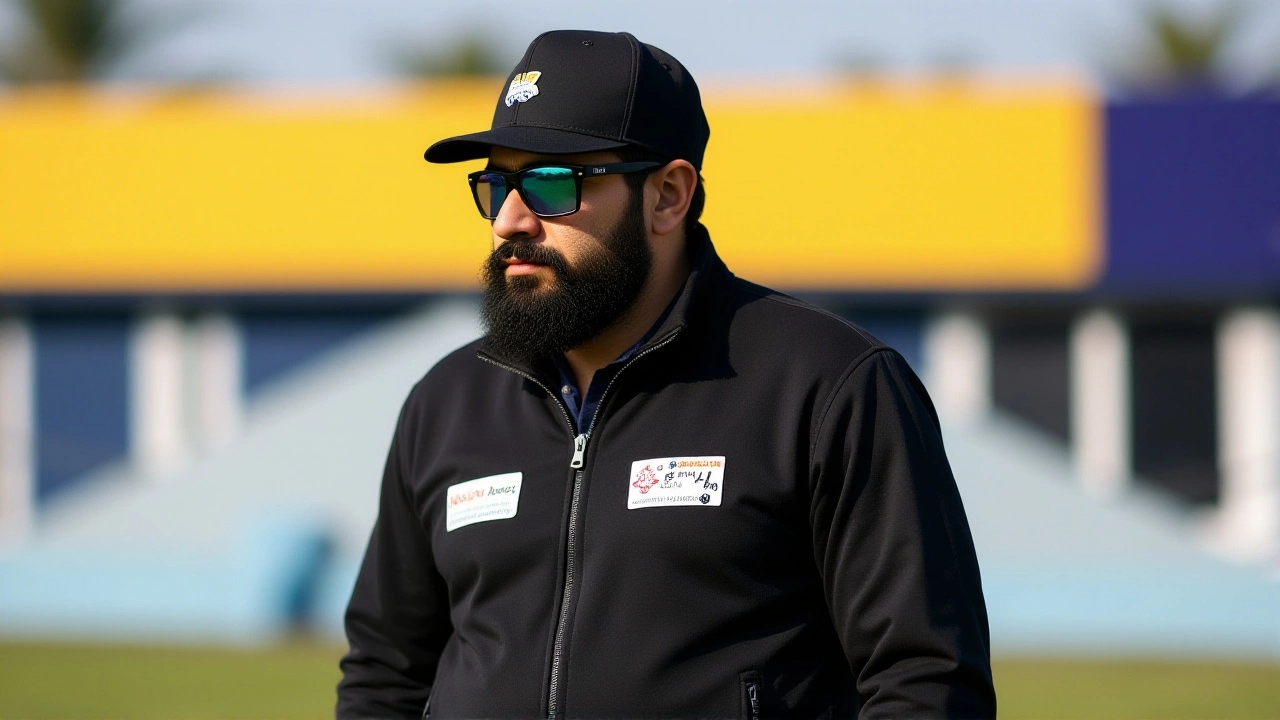
When Bismillah Jan Shinwari, a member of the ICC International Panel of Umpires from Afghanistan, died on in a hospital in Peshawar, Khyber Pakhtunkhwa, Pakistan, the cricket world was stunned. His brother Seyda Jan Shinwari told TOLOnews that the 41‑year‑old had travelled across the border for an abdominal‑fat removal operation, only to succumb to complications a few days later. The body was rushed back via the Torkham crossing and buried on July 8 in Achin, Nangarhar province. The tragedy instantly raised questions about the safety of medical tourism for Afghan professionals.
Background: Cricket’s Rise in Afghanistan
Afghanistan’s cricket journey has been meteoric. From refugee camps in Pakistan to full ICC member status in 2017, the sport has become a unifying force. Afghanistan Cricket Board (ACB) has invested heavily in grassroots programs, and one of its unsung heroes was Bismillah Jan Shinwari.
Career Highlights of a Trailblazing Umpire
Shinwari’s first international assignment came in December 2017, when he officiated an ODI between Afghanistan and Ireland in Sharjah, United Arab Emirates. From that debut, he accumulated:
- 34 One Day Internationals (ODIs)
- 26 Twenty‑20 Internationals (T20Is)
- 31 First‑Class matches
- 51 List A games
- 96 domestic T20 fixtures
Numbers vary slightly across sources, but every tally underscores his consistency. Jay Shah, Chairman of the International Cricket Council (ICC), called him "one of the greatest promoters of cricket in Afghanistan" after his death.
What Went Wrong: The Surgery and Its Aftermath
The operation was billed as an "abdominal fat removal" procedure—a form of bariatric surgery often sought by individuals aiming for rapid weight loss. According to Seyda Jan Shinwari, his brother was admitted for a few days before the surgery. "He got sick and went to Peshawar, saying he wanted to have abdominal fat removed," the brother recalled. Unfortunately, Shinwari never woke up from anesthesia. The exact medical cause remains unclear, but doctors in Peshawar have faced criticism for not providing comprehensive pre‑operative assessments for foreign patients.
Official Reactions and Tributes
The cricket community responded instantly. The ICC issued a heartfelt statement through its official channels, acknowledging Shinwari’s "huge contributions" and expressing condolences to his "family and loved ones." The ACB posted on X (formerly Twitter) that it prays for "the Almighty Allah (SWT) to grant him the highest ranks in Jannah and give patience and strength to his loved ones during this difficult time."
Fans from Kabul to London flooded social media with memories of Shinwari’s calm demeanor on the field. A former teammate noted, "He was the kind of umpire who could defuse a heated over with a single calm word."
Impact on Afghan Cricket and the Families He Supported
Beyond the wickets and runs, Shinwari was a pillar for his extended community. Relatives told reporters that he financially supported between 30 and 35 families, many of them already grieving from earlier tragedies. "Now there's no one left in his family to provide for his children," said Rahman Ali Shinwari, a close cousin.
He leaves behind five sons and seven daughters—an unusually large household in a country where average family size hovers around seven. The loss of his income will reverberate through these households, prompting the ACB to consider emergency assistance for his dependents.
Medical Tourism Across the Afghanistan‑Pakistan Border
Shinwari’s case shines a spotlight on a growing trend: Afghans crossing into Pakistan for specialized surgeries. The nearest tertiary hospitals with bariatric capabilities are in Peshawar and Islamabad, drawing patients from Jalalabad, Kunduz, and even Kabul. While the cost is often lower than in Dubai or Europe, regulatory oversight is patchy.
Health experts warn that patients may not receive comprehensive pre‑operative screenings, especially when language barriers exist. The Afghan Ministry of Public Health has pledged to review cross‑border medical agreements, but concrete steps remain pending.
What Comes Next: Legacy and Lessons
In the weeks ahead, the ACB is expected to hold a memorial match, possibly during the upcoming T20 league, to honor Shinwari’s service. Meanwhile, the ICC may revisit its protocols for supporting officials who seek medical care abroad, potentially establishing a fund for emergency health expenses.
For families like Shinwari’s, the immediate concern is financial stability. Community groups in Nangarhar have already launched a crowdfunding drive, aiming to raise the equivalent of $150,000 to cover education costs for his children.
Key Facts
- Who: Bismillah Jan Shinwari, ICC International Panel umpire
- When: Died July 7 2024, 5 PM PKT
- Where: Hospital in Peshawar, Khyber Pakhtunkhwa, Pakistan
- Why it matters: Loss of a senior umpire, spotlight on medical‑tourism risks, financial impact on dozens of families
- Next steps: ACB memorial, possible ICC health‑support policy review
Frequently Asked Questions
How does Shinwari’s death affect Afghanistan’s cricket officiating?
Shinwari was one of only a handful of Afghan umpires on the ICC panel. His absence creates an immediate gap in high‑level match assignments, forcing the ACB to accelerate the development of younger officials to maintain representation at international events.
What exactly was the surgical procedure Shinwari underwent?
Reports describe it as an abdominal‑fat removal, commonly known as a bariatric or weight‑loss surgery. While the precise technique (e.g., sleeve gastrectomy vs. gastric bypass) wasn’t disclosed, the procedure is usually performed to reduce excess visceral fat.
Why do Afghan patients travel to Pakistan for medical care?
Afghanistan’s health infrastructure lacks many specialized services, especially advanced bariatric surgery. Pakistan’s private hospitals offer these procedures at lower costs than Western alternatives, making them an attractive, albeit risky, option for many Afghans.
What support is being offered to Shinwari’s family?
The ACB announced a condolence fund, and community members in Nangarhar launched a crowdfunding campaign targeting $150,000. Additionally, the ICC said it would explore a one‑time assistance package for the dependents of officials who die abroad.
Could this incident prompt policy changes for medical tourism?
Health officials in Kabul have pledged a review of cross‑border medical agreements. While no formal policy shift is confirmed yet, the tragedy is likely to accelerate discussions on mandatory health insurance or pre‑travel medical clearances for Afghans seeking treatment abroad.