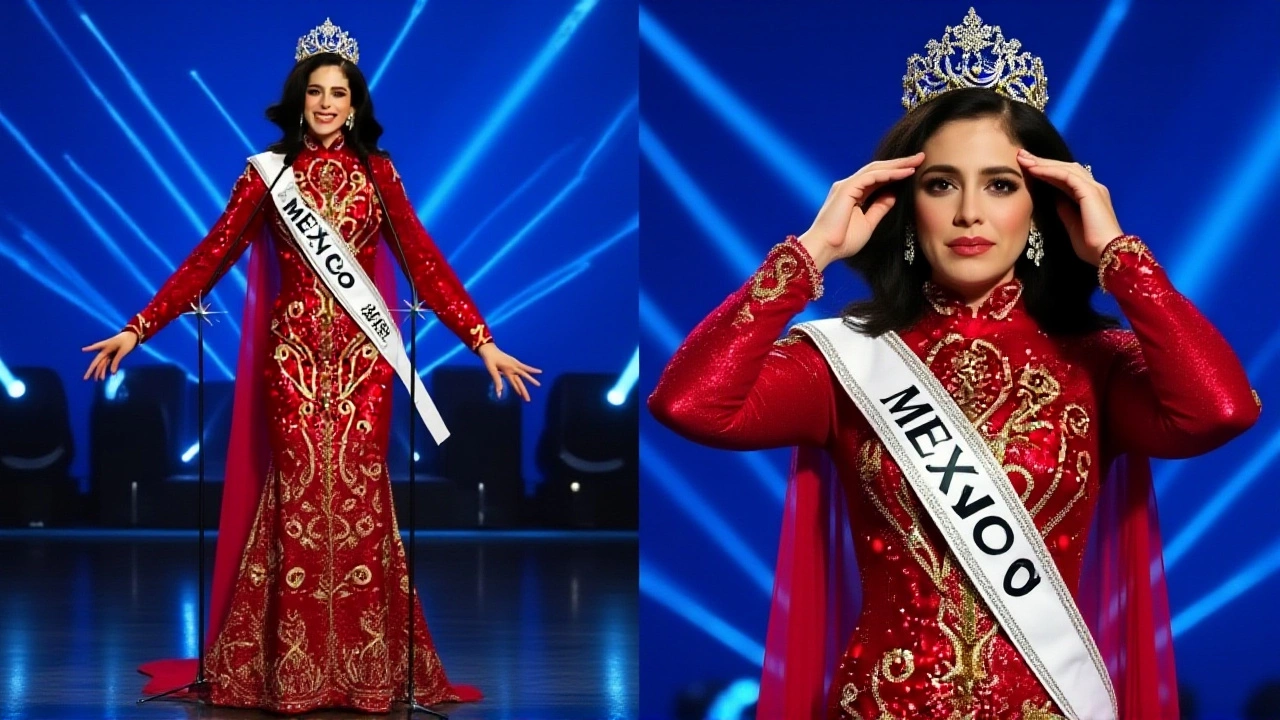
When Fátima Bosch Fernández stepped onto the stage in Bangkok on November 21, 2025, her foot throbbing from a lingering injury and her name still echoing in global headlines, she didn’t just win a crown—she rewrote the script of what a beauty queen can be. The 25-year-old Mexican fashion designer, born on May 19, 2000, in the quiet town of Santiago de Teapa, Tabasco, became the first woman from her state to claim both the Miss Universe Mexico title and the international crown, making Mexico the fourth country to produce four Miss Universe winners. She defeated Thailand’s Praveenar Singh and Venezuela’s Stephany Abasali at the 74th Miss Universe IMPACT Arena, but her victory wasn’t just about poise—it was about persistence.
A Crown Won in Pain
Bosch didn’t just walk into the final round—she limped in. Weeks before the pageant, she revealed in a livestream that a small fragment of bone still lodged in her foot from a past injury refused to heal. "It’s still there," she said, matter-of-factly. "But I’m not missing this. Not for anything." Her physical struggle was no secret. Contestants noticed. Judges noted. And when she answered the final question—"How will you use your platform to empower young girls?"—her response wasn’t rehearsed. It was raw: "Believe in the power of your authenticity. Your dreams matter. Your heart matters. Never let anyone make you doubt your worth." The room fell silent. Then, thunderous applause.The Walkout That Changed Everything
The controversy began days before the final, during a pre-pageant briefing in Bangkok. Nawat Itsaragrisil, director of Miss Universe Thailand, reportedly reprimanded Bosch in a live-streamed meeting for allegedly failing to post enough promotional content. According to multiple contestants and outlets like Hausa Tracks, he used the term "dumbhead"—a word he later denied saying, claiming he only accused her of "causing damage." What happened next was unplanned, unforgettable: Bosch stood up, said nothing, and walked out. Cameras rolled. The moment went viral. What followed was extraordinary. Reigning Miss Universe 2024, Victoria Kjær Theilvig of Norway, publicly supported Bosch. Several other contestants shared messages of solidarity on social media. The act wasn’t just defiance—it was a quiet revolution. "She didn’t yell. She didn’t cry. She just left," said one anonymous contestant. "And suddenly, we all realized: this isn’t about social media metrics. It’s about dignity." The incident became a global talking point, with ABS-CBN Entertainment calling it "the most powerful non-verbal statement in pageant history.""
From Tabasco to the World Stage
Bosch’s path to the crown was anything but traditional. At 18, she won Flor de Oro at Flor Tabasco 2018—a local pageant that felt like a dream to her family, who ran a small textile shop in Santiago de Teapa. She studied fashion design at Universidad Iberoamericana in Mexico City, then refined her craft at Nuova Accademia di Belle Arti in Milan and the Lyndon Institute in Vermont. Her degree wasn’t just a credential—it was her armor. She designs clothes from discarded fabrics, turning waste into wearable art. She’s also been open about living with dyslexia, ADHD, and hyperactivity since childhood. "I didn’t fail school because I wasn’t smart," she told Hindustan Times. "I failed because they didn’t know how to teach me." That perspective shaped her platform: anti-bullying, neurodiversity awareness, and self-worth. Her advocacy isn’t performative. She volunteers with Ruta Monarca, supporting children with cancer, and Corazón Migrante, aiding displaced families crossing borders.Why This Matters
Mexico’s last Miss Universe winner, Andrea Meza, took the crown in 2020. Since then, the pageant has faced criticism for being outdated, overly commercialized, and disconnected from real struggles. Bosch’s win flips that narrative. She didn’t come from a polished corporate background or a glamorous urban upbringing. She came from a place most pageants overlook—and she carried its heartbeat with her. Her victory isn’t just symbolic. It’s structural. It signals that the Miss Universe organization, under new leadership since 2023, is embracing authenticity over perfection. And it’s resonating. Within 24 hours of her win, the official Miss Universe app saw a 300% spike in downloads from Latin America. Social media posts tagged #FátimaBosch reached 12 million impressions in 48 hours.
What’s Next?
Bosch will relocate to the official Miss Universe apartment in New York City, where she’ll spend the next year traveling globally, speaking at schools, launching her sustainable fashion line, and partnering with NGOs. She’s already confirmed appearances with the United Nations’ Girls’ Education Initiative and the World Health Organization’s mental health campaign. But perhaps the most telling sign of her impact? Teenagers in Tabasco are now asking their parents to enroll them in local design workshops. A new generation is seeing themselves in her—not as a beauty queen, but as a force.Frequently Asked Questions
How did Fátima Bosch Fernández’s injury affect her performance at Miss Universe 2025?
Despite a painful foot injury with a lingering bone fragment, Bosch competed in all rounds, including the final walk and question segment. She declined medical intervention to avoid missing events, relying on pain management and support from fellow contestants. Her physical endurance became a silent part of her narrative, earning admiration from judges and viewers alike.
Why was Nawat Itsaragrisil’s comment controversial?
Though Itsaragrisil denied using the word "dumbhead," multiple contestants and media outlets reported he publicly berated Bosch during a live-streamed meeting for insufficient social media promotion. His tone, perceived as demeaning, sparked outrage. The incident exposed tensions between pageant commercialization and contestant autonomy, leading to widespread calls for reform in how contestants are treated behind the scenes.
What makes Fátima Bosch Fernández’s win historic for Mexico and Tabasco?
She is the first woman from Tabasco to win both the national Miss Universe Mexico title and the international crown. Mexico now joins the U.S. and Venezuela as the only countries with four Miss Universe winners. Her win also breaks the mold of previous Mexican winners, who largely came from major cities like Monterrey or Mexico City—Bosch’s roots in a rural, underserved town reshaped the narrative of who gets to represent the nation.
How is Fátima Bosch Fernández using her platform beyond the pageant?
Bosch is focusing on anti-bullying initiatives, neurodiversity advocacy, and sustainable fashion. She designs garments from recycled materials and volunteers with Ruta Monarca (supporting children with cancer) and Corazón Migrante (aiding displaced families). She’s also partnered with the UN’s Girls’ Education Initiative and plans to launch a scholarship fund for girls in Tabasco pursuing design or STEM fields.
What’s the significance of her walkout during the pre-pageant meeting?
Her walkout became a global symbol of resistance against exploitative pageant culture. It inspired fellow contestants to speak out about mental health and pressure, and prompted the Miss Universe Organization to review its contestant treatment policies. Within a week, the organization announced new guidelines prohibiting public reprimands and mandating mental health check-ins during competition.
How did her background with dyslexia and ADHD influence her journey?
Bosch credits her neurodiversity with helping her think differently—seeing patterns others miss, expressing herself creatively, and refusing to conform to rigid expectations. She speaks openly about how traditional education failed her, which fuels her mission to create inclusive spaces. Her confidence during the final question, she says, came not from training, but from learning to trust her own voice despite years of being told she wasn’t "normal."